

As an industrial power socket supplier deeply entrenched in the market, I've witnessed firsthand the critical role that these components play in a wide array of industrial settings. One of the most pressing questions customers often ask is whether industrial power sockets are made of fire - resistant materials. To delve into this topic comprehensively, it's essential to understand the principles at work, the regulatory requirements, and the real - world applications.

The Science Behind Fire - Resistant Materials
At the molecular level, fire - resistant materials possess unique characteristics that allow them to withstand high temperatures without easily igniting or propagating flames. These materials typically have high melting points, which prevent them from quickly succumbing to heat. For industrial power sockets, polymers such as polycarbonate are commonly used due to their inherent flame - retardant properties.
Polycarbonate is a thermoplastic polymer that has excellent mechanical strength and can maintain its integrity at elevated temperatures. It contains chemical groups that release water vapor or carbon dioxide when exposed to flames or high heat. This process is called endothermic decomposition, where the material absorbs heat from the environment around it. As a result, the heat transfer to the socket's internal structure and any connected wires is significantly reduced, minimizing the risk of fire.
Another factor contributing to the fire - resistance of these sockets is the use of additives. Manufacturers often incorporate flame - retardant additives into the base materials. These additives work by interfering with the combustion process. For instance, they can form a protective layer on the surface of the socket during a fire, preventing oxygen from reaching the combustible parts. This is crucial as oxygen is one of the key elements in the fire triangle (along with fuel and heat).
Regulatory Requirements for Fire Safety
In the industrial sector, safety is of paramount importance. Regulatory bodies around the world have established strict standards to ensure that industrial power sockets meet certain fire - safety criteria. For example, in Europe, the IEC (International Electrotechnical Commission) sets standards such as IEC 60309, which specify requirements for industrial plugs, sockets, and couplers. These standards cover aspects related to mechanical and electrical safety, including fire resistance.
In the United States, the National Electrical Code (NEC) also mandates that electrical equipment, including power sockets, must be fire - resistant. Compliance with these regulations is not just a matter of following the law; it is also a way for suppliers and manufacturers to demonstrate their commitment to safety. A power socket that fails to meet these fire - safety standards not only poses a significant risk to the workplace but can also result in hefty fines for the businesses that use them.
Real - World Applications and Fire Risks
Industrial power sockets are used in a variety of environments, each with its own set of fire risks. In manufacturing plants, for example, these sockets are often connected to high - power machinery. If a socket is not made of fire - resistant materials, a short - circuit or overheating can quickly lead to a fire. The combination of combustible materials in the plant, such as plastics, wood, and chemicals, can turn a small electrical fire into a large - scale disaster.
In the oil and gas industry, the situation is even more critical. Sockets are exposed to explosive atmospheres, and any spark or fire can lead to a catastrophic explosion. Therefore, power sockets in these environments must be designed to be explosion - proof as well as fire - resistant. They are often made of special alloys and polymers that can withstand extreme temperatures and pressures.
Our Product Offerings
As a leading industrial power socket supplier, we take fire safety seriously. Our product line includes a range of high - quality sockets that are made of fire - resistant materials. For instance, the LEE - 3342 3P+E IP67 Industrial Socket is designed for outdoor and harsh industrial environments. Its polycarbonate housing is highly resistant to fire and can protect the internal electrical components even in the event of a nearby fire.
The LEE - 314 3P+E IP44 Industrial Socket is suitable for indoor industrial applications. It is made of a flame - retardant polymer that has been tested to meet international fire - safety standards. This socket provides reliable electrical connections while minimizing the risk of fire.
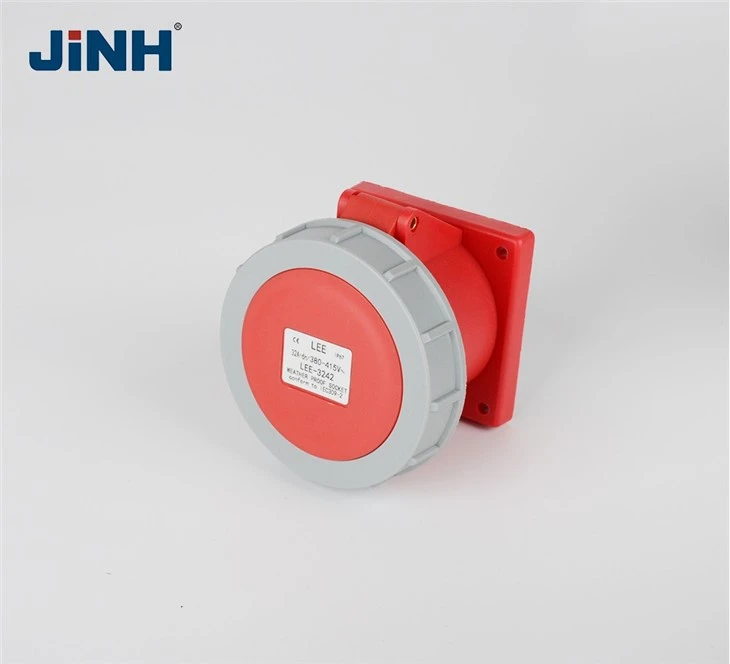
Another great option is the LEE - 3242 3P+E IP67 Industrial Socket. This socket is built to withstand tough conditions, including high temperatures and moisture. Its fire - resistant properties make it an ideal choice for industries where fire safety is a top priority.
Conclusion
In conclusion, industrial power sockets are often made of fire - resistant materials to ensure the safety of users and prevent fire hazards. Through the use of advanced polymers and flame - retardant additives, these sockets can withstand high temperatures and minimize the risk of ignition. Regulatory standards further ensure that these products meet strict fire - safety requirements.
If you are in the market for reliable and fire - resistant industrial power sockets, we invite you to explore our product range. Our team is ready to assist you in choosing the right products for your specific needs. Please feel free to contact us for more information, product specifications, and to start a procurement discussion.
References
- International Electrotechnical Commission (IEC). IEC 60309: Plugs, socket - outlets and couplers for industrial purposes.
- National Fire Protection Association (NFPA). National Electrical Code (NEC).
- Textbooks on polymer science and materials engineering for details on fire - resistant polymers.